
Background to the Interview
Shanghai SGR Microelectronics Co., Ltd. (hereinafter referred to as ‘SGR’) is a high-tech enterprise specialising in the development of millimetre-wave radar chips and system products. The company has developed the first highly integrated 24GHz millimetre-wave radar system-on-chip (SoC) with independent domestic intellectual property rights. Leveraging its robust technical expertise, Sijie Micro has now developed a series of highly integrated 24GHz and 77/79GHz products, offering one-stop solutions ranging from chips to modules, thereby helping customers shorten development cycles and enhance product competitiveness. In addition to the field of Advanced Driver Assistance Systems (ADAS), Sijie Micro is also committed to promoting the application of millimetre-wave radar in Internet of Things (IoT) sectors such as smart transport, smart homes and smart communities, striving to contribute to the development of next-generation sensor and internet technologies.
From 26 to 28 April 2019, MEMS Consulting will host an ‘Autonomous Driving Sensing Technology Training Course’ in Wuxi. Dr Lu Yumin, Founder and General Manager of Sijie Micro, has been specially invited to deliver a lecture, in which he will provide a detailed explanation of ‘Core MMIC Chip Technology for Millimetre-Wave Radar’. To gain a detailed understanding of the applications of millimetre-wave radar chips in the automotive and Internet of Things (IoT) sectors, as well as the progress of their localisation, MEMS Consulting conducted an exclusive interview with Dr Lu of Sijie Micro. The highlights of the interview are presented below.

Dr Lu Yumin, Managing Director of SGR
MEMS Consulting: First of all, could you briefly introduce the development history and team structure of Sijie Micro?
Lu Yumin: Shanghai Sijie Microelectronics Co., Ltd. originated from the Radio Frequency Integrated Circuit (RFIC) team at the Shanghai Institute of Microtechnology (referred to as the Institute). This was the team I established at the Institute after returning from the United States in 2014. The core members come from leading companies and universities in this field, such as M/A-COM, Autoliv, NXP, Spreadtrum and Shanghai Jiao Tong University. We have a highly skilled design, development and mass production team, possessing solid design expertise and extensive product development experience. At the end of 2016, the company formally spun off from the Institute to operate independently. We are currently developing smoothly.
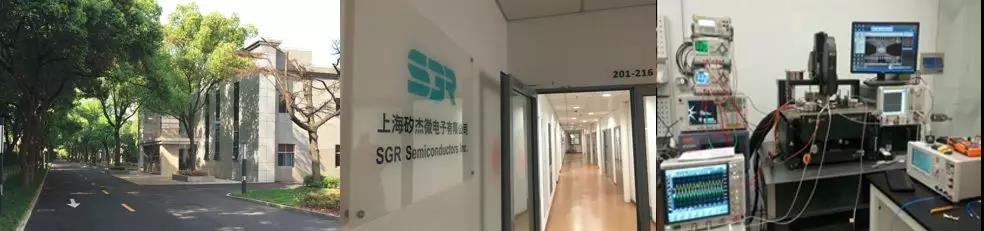
Image: SGR’s office area and laboratory
MEMS Consulting: What core technologies has Sijie Micro mastered? And what intellectual property has the company secured?
Lu Yumin: The company’s core competitiveness lies in its specialised know-how in the design, development and mass production of silicon-based millimetre-wave radar chips. Centred on the design, mass production and application of millimetre-wave radar chips, we are also actively pursuing the application for and protection of relevant intellectual property. Through a ‘product plus patent’ approach, we are further expanding our domestic and international markets.
MEMS Consulting: Could you please introduce SGR’s millimetre-wave radar chip products and their main areas of application?
Lu Yumin: We currently have two product lines. The 24GHz product line includes the high-performance SRK1201L, the SRK1202A with an integrated PLL (phase-locked loop), and the low-power SRK1101, amongst others. The SRV3401 from our 77/79 GHz product line is due to be launched shortly. Our third product line is also currently under development. Our 24 GHz products cover two major application areas: automotive and the Internet of Things (IoT). The 77/79 GHz products are currently primarily targeted at automotive applications. Within the IoT sector, we are particularly optimistic about three areas: smart transport, smart communities and smart homes.
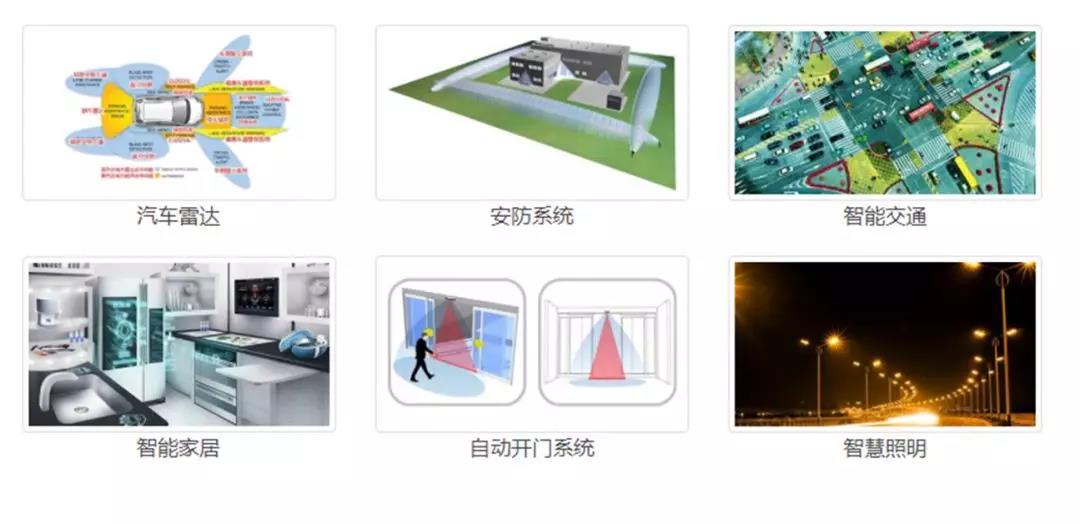
Figure: Main application areas of millimetre-wave radar
MEMS Consulting: SGR has independently developed China’s first fully integrated 24GHz radar system-on-chip (SoC) with both transmitter and receiver functions. Compared to similar foreign products, could you please outline the technical and product advantages of SGR’s solution?
Lu Yumin: The SRK1201L chip was launched by us in 2017 and is designed to compete with overseas 1T2R fully integrated transceiver products. We have detailed technical specifications demonstrating the superiority of our product; here, I shall briefly highlight a few aspects:
1. Our product exhibits excellent frequency and temperature stability in the VCO, which is a crucial feature for many domestic radar customers who utilise open-loop control.
2. Our product offers superior transmit-receive isolation. Transmit-receive isolation is a crucial parameter for all radar systems, and our isolation is approximately 10 dB higher than that of comparable overseas products.
3. All RF ports on our product are single-ended, which reduces the need for customers to add baluns to their PCBs (as the antenna is a single-ended design; if the chip’s RF ports were differential, a differential-to-single-ended balun would be required between the antenna and the chip).
Furthermore, our chip incorporates numerous digital adjustment and BIST (Built-in Self-Test) functions, which help customers to quickly identify and adjust the chip’s operating state. Building on this product, we launched the SRK1202A in 2018, which further integrates a high-performance PLL (Phase-Locked Loop) on-chip. Its 26-bit fractional divider achieves hertz-level division accuracy and supports various modulation modes such as FSK, FMCW and LMFSK. The PLL charge pump current is adjustable, with a maximum value of 2.1 mA, corresponding to phase-detection frequency spurious levels of less than –55 dBc.
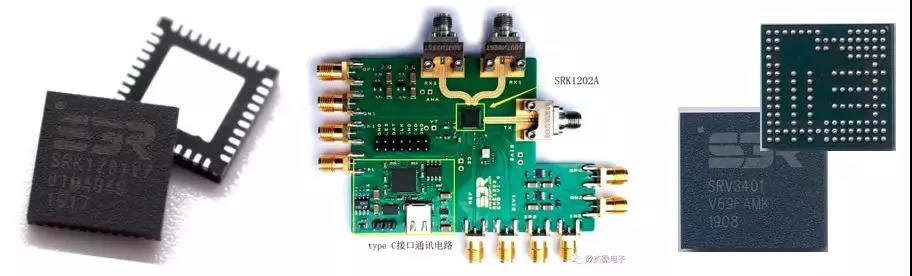
Figure: Siljet Micro’s 24 GHz millimetre-wave radar product series
MEMS Consulting: The current mainstream trend in automotive millimetre-wave radar is a shift from 24 GHz to 77/79 GHz. SGR is simultaneously developing chips for both 24 GHz and 77/79 GHz. Could you outline the changes in radar chip design, manufacturing and packaging processes involved in this transition from 24 GHz to 77/79 GHz? What are the main technical challenges?
Lu Yumin: There are two trends in the development of silicon-based analogue chips: one is an increase in power, and the other is a rise in frequency. The design of high-frequency circuits first requires semiconductor process manufacturers to provide accurate device models, which is actually a major challenge for most foundries. From a chip design perspective, as the frequency increases, the wavelength becomes shorter. More often than not, designers need to adopt a microwave circuit design approach, rather than the traditional analogue circuit design philosophy based on voltage and current. The design methods and processes for microwave circuits are, in fact, one of the strengths of the SGR design team. In terms of packaging, traditional wire bonding is unsuitable for millimetre-wave radar due to excessive line loss and parasitic inductance effects; it has been replaced by flip-chip and ball grid array (BGA) packaging methods. Similarly, the application of these packaging methods to high-frequency chips poses significant challenges for manufacturers, as they demand higher levels of precision and consistency in production. In terms of design, we conduct comprehensive electromagnetic simulations of both the package and the chip to ensure that our chips maintain excellent performance after packaging.
MEMS Consulting: At present, with which domestic radar module manufacturers or original equipment manufacturers (OEMs) has Sijie Micro established partnerships? How is progress going?
Lu Yumin: There are currently a considerable number of radar module developers in China, and Silicon杰微 maintains good working relationships with the majority of its downstream customers. We hope that, with our support, domestic module manufacturers will be able to enter the finished equipment market smoothly and as soon as possible.

Figure: Applications of millimetre-wave radar in automotive ADAS
MEMS Consulting: The millimetre-wave radar chip market is currently dominated by international semiconductor companies such as NXP, Infineon and Texas Instruments (TI), which poses a significant challenge to China’s indigenous chip design industry. In light of this, what market strategies will Sijie Micro adopt to find a breakthrough?
Lu Yumin: The bottleneck for the application of domestic automotive radar still lies with the original equipment manufacturers (OEMs). For any product—be it a chip or a module—iteration and refinement are an inevitable process; however, without the opportunity to be integrated into end-user applications, such development is simply not possible. As a domestic company, we will provide more timely and comprehensive customer support, and aim to gain customer recognition through products offering better value for money. As the adoption rate of ADAS features continues to rise, we hope that domestic substitution will truly enter a virtuous cycle. This requires the concerted efforts of manufacturers across all links in the supply chain.
MEMS Consulting: 5G communications are currently developing rapidly, and it is said that the 24 GHz band will be allocated to 5G; consequently, 24 GHz millimetre-wave radar for vehicles will gradually be replaced by 77/79 GHz systems in the future. What is your view on this matter? What adjustments will Siljet Micro make to the future market for 24 GHz millimetre-wave radar chips?
Lu Yumin: There are currently four experimental bands for 5G in China. One of these is 24.75 GHz to 27.5 GHz. At present, most 24 GHz radars in China are ISM radars, operating within the 24 GHz to 24.25 GHz range. This band is a globally shared ISM band and will not be withdrawn. For 24 GHz ultra-wideband (UWB) radar, the domestic band is 24.25 GHz to 26.65 GHz; this band overlaps somewhat with the 5G experimental bands, so there is a degree of uncertainty regarding its future. From the perspective of avoiding spectrum conflicts, future UWB systems will either operate below 24.75 GHz (i.e., within the 750 MHz bandwidth from 24 GHz to 24.75 GHz) or utilise the 79 GHz band. As for 24 GHz ISM radar, we believe it will remain in use for the long term.
MEMS Consulting: Apart from the automotive sector, SGR is also focusing on the application of millimetre-wave radar in the Internet of Things (IoT) sector. In the area of smart parking, SGR is currently collaborating with Xiamen Keto to launch a millimetre-wave radar solution for smart barrier gates. Could you provide some details about this project? What is the current status of the project?
Lu Yumin: As mentioned earlier, in addition to the automotive market, we are also working to promote the application of radar in smart transport, smart communities and smart homes. For example, our collaboration with Xiamen Keto on radar for car park barriers forms part of our efforts in the smart transport sector. Smart barriers are a key entry point for the smart parking industry; the installation of traditional barriers requires road excavation, which not only entails high maintenance costs but also lacks protection against accidental impact. In contrast, millimetre-wave radar solutions offer clear advantages, including simple installation, easier subsequent commissioning, maintenance and upgrades, as well as excellent adaptability to varying lighting conditions, rain, snow, dust and smoke. Millimetre-wave radar achieves a high detection rate for passing vehicles, effectively preventing false alarms, missed detections or incidents of vehicles being struck, thereby addressing the shortcomings of ground-loop sensors and infrared systems in detecting pedestrians. I believe that millimetre-wave radar technology will continue to expand into vast markets in areas such as smart communities and smart homes in the future. This aligns with the trends of the Internet of Things (IoT) and intelligent systems, and offers a long-term growth trajectory of over 10 years.
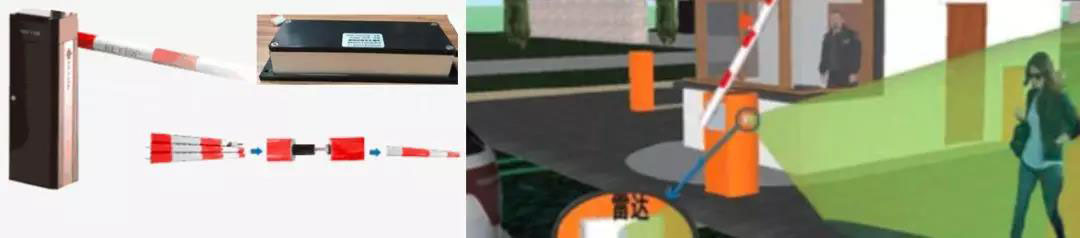
Figure: Example of Siljet Micro’s millimetre-wave radar products applied to Xiamen Keto’s parking barrier system
MEMS Consulting: Domestic R&D into millimetre-wave radar chips got off to a late start, and the current US trade war is directly targeting the vulnerabilities of Chinese chips. As a domestic chip manufacturer, SGR Micro faces a long and arduous journey. Could you share with us some insights or advice regarding Sijie Micro’s exploration of the industrialisation of millimetre-wave radar chips?
Lu Yumin: Domestic millimetre-wave radar chips remain relatively weak in both production and design. As a fabless chip design company, we primarily rely on overseas suppliers for manufacturing. We hope this situation will improve in the future. Domestic manufacturers may find it relatively easier to make breakthroughs in the packaging and testing stages, but wafer fabrication will prove more challenging. The main challenge on the design side is the relative shortage of domestic talent; in fact, as our company has grown, we have been gradually cultivating our own technical talent. For an emerging field such as millimetre-wave radar, the industrialisation of the entire market cannot be driven by just one or two companies; it requires concerted efforts across all stages of the supply chain. With the rise of the end-user market, we believe this ecosystem will continue to improve.
MEMS Consulting: Finally, could you tell us about SGR Microelectronics’ future vision and development plans?
Lu Yumin: SGR Microelectronics has rapidly grown from a design team into a product company. We have a clear product and technology roadmap and are very optimistic about the future market. Our team has also grown rapidly. I am delighted that we have received the support and assistance of many partners throughout the company’s development. I am confident that SGR Microelectronics will become a very important player in this sector in China. Thank you!