
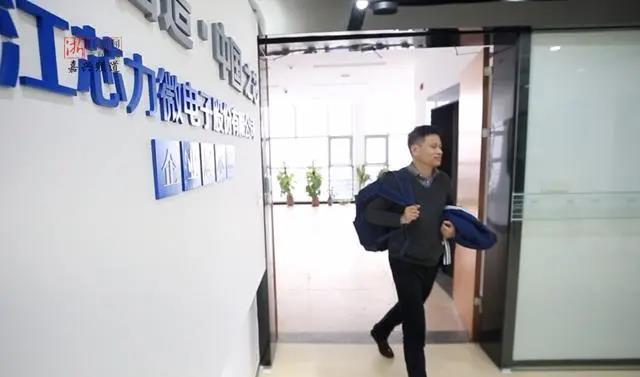
Sorting through orders, liaising with clients, coordinating production… At 9.00 am on 8 April, in Jiading, Shanghai, Qin Wei, Deputy General Manager of Zhejiang Xinli Microelectronics Co., Ltd., had already wrapped up a busy early morning. After driving for just over an hour, he arrived at the Science and Technology Innovation Centre in Jiashan County, Zhejiang.

In 2018, this technology company—which had grown and been incubated in Shanghai—chose to set up operations in Jiashan to commence industrial-scale production of modular radar modules, thereby further expanding its market reach into sectors such as smart cars and the Internet of Things. Since then, Qin Wei has led a working life that involves commuting between these two locations.
His hometown is in Jiangsu, his work is in Shanghai, and now the company’s operations have shifted to Zhejiang. Having grown up in the Yangtze River Delta, Qin Wei harbours boundless expectations for the company’s future development. Xinli Microelectronics is a high-tech enterprise specialising in the development of millimetre-wave radar chips and system products. Leveraging the application-level chip R&D platform at the Shanghai Institute of Microsystem and Information Technology of the Chinese Academy of Sciences, the company has developed China’s first fully integrated millimetre-wave radar chip with both transmitter and receiver functions. It has since developed a series of highly integrated products operating at 24 GHz and 77/79 GHz, providing one-stop solutions ranging from chips to modules.
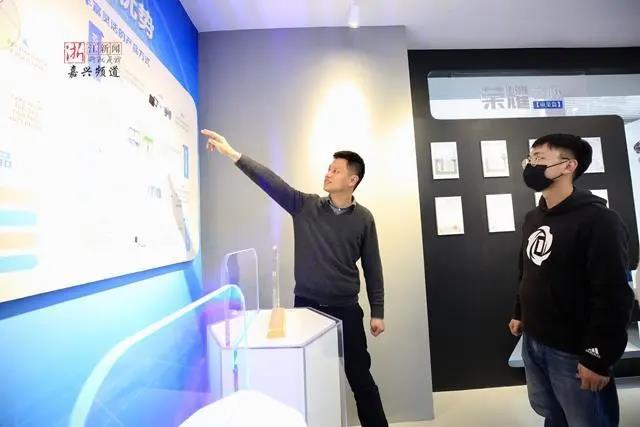
“To date, we have been granted seven product patents, with a further 15 currently under review.” When discussing the company’s product advantages, Qin Wei spoke with great familiarity.
In the company’s showroom, smart technology is evident everywhere. A radar chip measuring just 5 millimetres, when installed in a smart water heater, lights up the display to alert the user when someone approaches; in smart cars, the vehicle can issue a warning within 0.01 seconds via a radar module when an obstacle is within 200 metres; when paired with modules and algorithms, the chip can detect a person’s heart rate and breathing rate without physical contact… Qin Wei explained that the company’s products are currently mainly applied in the fields of smart transport, smart homes and smart communities, and that they also hold broad prospects for future application in next-generation sensor and internet technologies.
When discussing the company’s choice of location, he admitted that the decision to establish the business in Jiashan ultimately came down to the team’s appreciation of the area’s strategic location and business environment.

In the first half of 2019, at the Jiashan session of the inaugural Yangtze River Delta Global Science and Technology Innovation Project Roadshow, the Xinli Microelectronics project was formally signed and established. With the support and assistance of the Jiashan County Science and Technology Bureau, the Bureau of Economy and Information Technology and other departments, the company completed the design and refurbishment of its factory premises; in the space of just a few months, it progressed from signing the agreement and establishing operations to commencing production. The first phase of the project involved an investment of 30 million yuan, of which the 4 million yuan test line has already been completed; output value reached 16 million yuan in 2019.
It was also in that year that the Yangtze River Delta Ecological and Green Integrated Development Demonstration Zone was approved by the State Council. On 1 November, at the Conference on Advancing the Construction of the Yangtze River Delta Ecological and Green Integrated Development Demonstration Zone, five towns—Jinze and Zhujiajiao in Qingpu, Shanghai; Lili in Wujiang, Jiangsu; and Xitang and Yaozhuang in Jiashan, Zhejiang—were designated as pilot zones. “Talent follows industry,” Qin Wei candidly remarked. As the benefits of the Yangtze River Delta region are realised and the technology sector clusters, the influx of technology-based enterprises and talent has become a foreseeable reality for Jiashan.
Right at the start of this year, the outbreak of the pandemic left many enterprises facing development challenges. On 4 February, Jiashan County officially issued the ‘Sixteen Policy Measures of the Jiashan County People’s Government on Responding to the Sudden Outbreak and Supporting the Stable Development of Enterprises’, covering 16 areas including stabilising credit, reducing taxes and levies, providing support to enterprises to safeguard jobs, increasing investment subsidies, and lowering financing costs for micro and small enterprises. These measures have been dubbed the ‘Sixteen Measures to Support Enterprises’. As soon as the policy was announced, the Jiashan County Science and Technology Bureau immediately issued implementing rules. Before long, Xinli Microelectronics received a blue rent reduction card from the Jiashan Science and Technology Innovation Centre, which exempted the company from nearly 25,000 yuan in rent for three months.
Today, whether in Jiashan, Shanghai or his home province of Jiangsu, Qin Wei sees all these places as offering great potential. “We have also relocated part of our supply chain to Jiaxing, Zhejiang,” said Qin Wei. “Within the Yangtze River Delta region, the government has shown considerable determination in developing emerging industries. Through synchronised efforts in differentiated development and the synergistic advantages of regional growth, the future holds boundless possibilities for enterprises across the region.”